
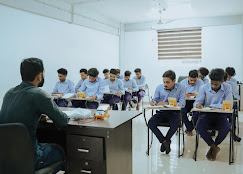
Traditional education focuses heavily on theory, but today’s job market demands practical skills. Companies are looking for candidates who can perform tasks, not just explain concepts.
Practical learning helps students understand how real work happens. For example, in hospital administration, students learn patient handling, hospital systems, and coordination. In logistics, students learn warehouse operations, inventory, and supply chain processes.
Workshops, internships, and industry visits give real exposure. This helps students reduce fear and improve confidence.
Students who learn practically are more job-ready compared to those who only study theory. They can attend interviews with confidence and perform better in real job situations.
That is why skill-based education is becoming the future.


Comments (2)
Obila Doe
Our infrastructure management approach is holistic, addressing capacity monitoring, data storage, network utilisation, asset lifecycles, software patching, wired and wireless networking and more.
James Weighell
A hosted desktop solution allows for the delivery of a consistent and scalable IT experience for all users in an organisation. With this solution, users gain access via a desktop icon or link.